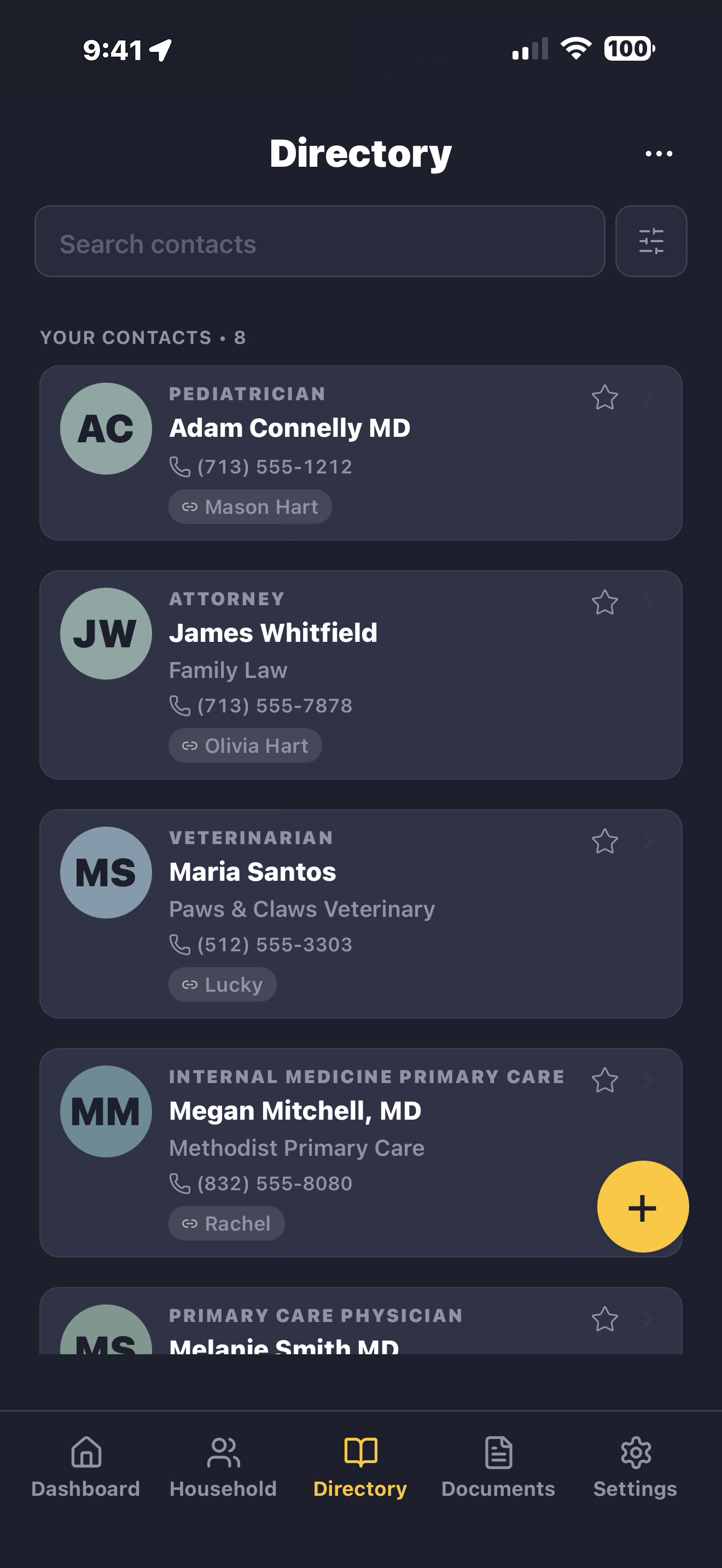
Scan documents, extract key details, and build structured records for the people you care for. Create a complete, shareable summary — ready for a doctor, caregiver, or emergency room when it's needed.
Medication lists on a notepad. Dosages you can't remember. Prescribers whose names you've forgotten. LifeVault organizes every prescription — dosage, frequency, prescriber, pharmacy, and refill dates — into searchable records linked to the right person.
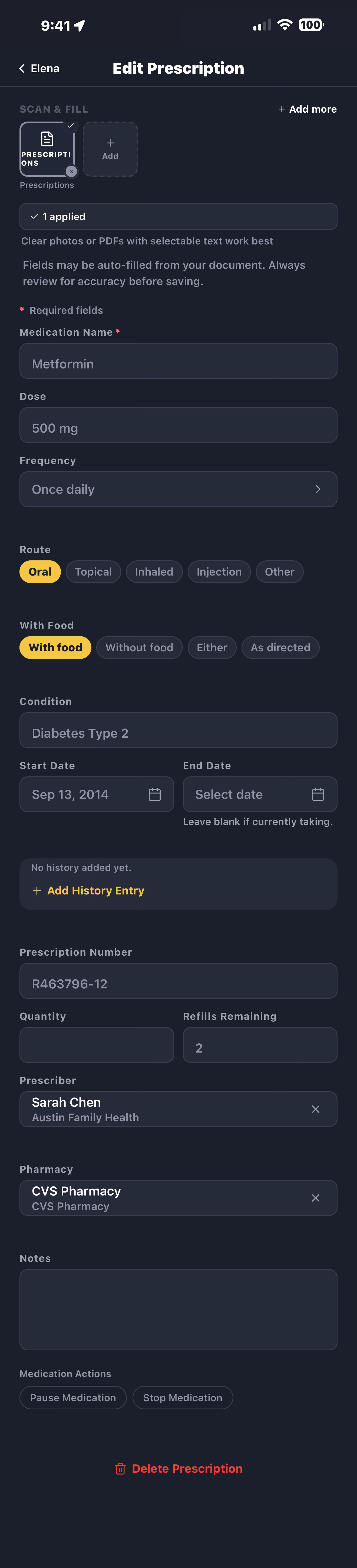
Scan a prescription label — LifeVault extracts the medication name, dosage, prescriber, and pharmacy into editable fields you review before the record is created.
Caregiving isn't a snapshot — it's a history. Build a timeline for the person you care for: when a medication started or stopped and what it was for, a cognitive change, a fall, a hospital stay, a procedure. So when it matters, you can see the whole arc instead of piecing it together from memory and patient portals.
Every medication with what it treats and who prescribed it — and a record of what started, stopped, or changed.
Cognitive changes, falls, hospital stays, rehab — add them as custom events so nothing important goes unrecorded.
“When did this start?” “What changed since the last visit?” The history is right there, in order — not reconstructed from memory.
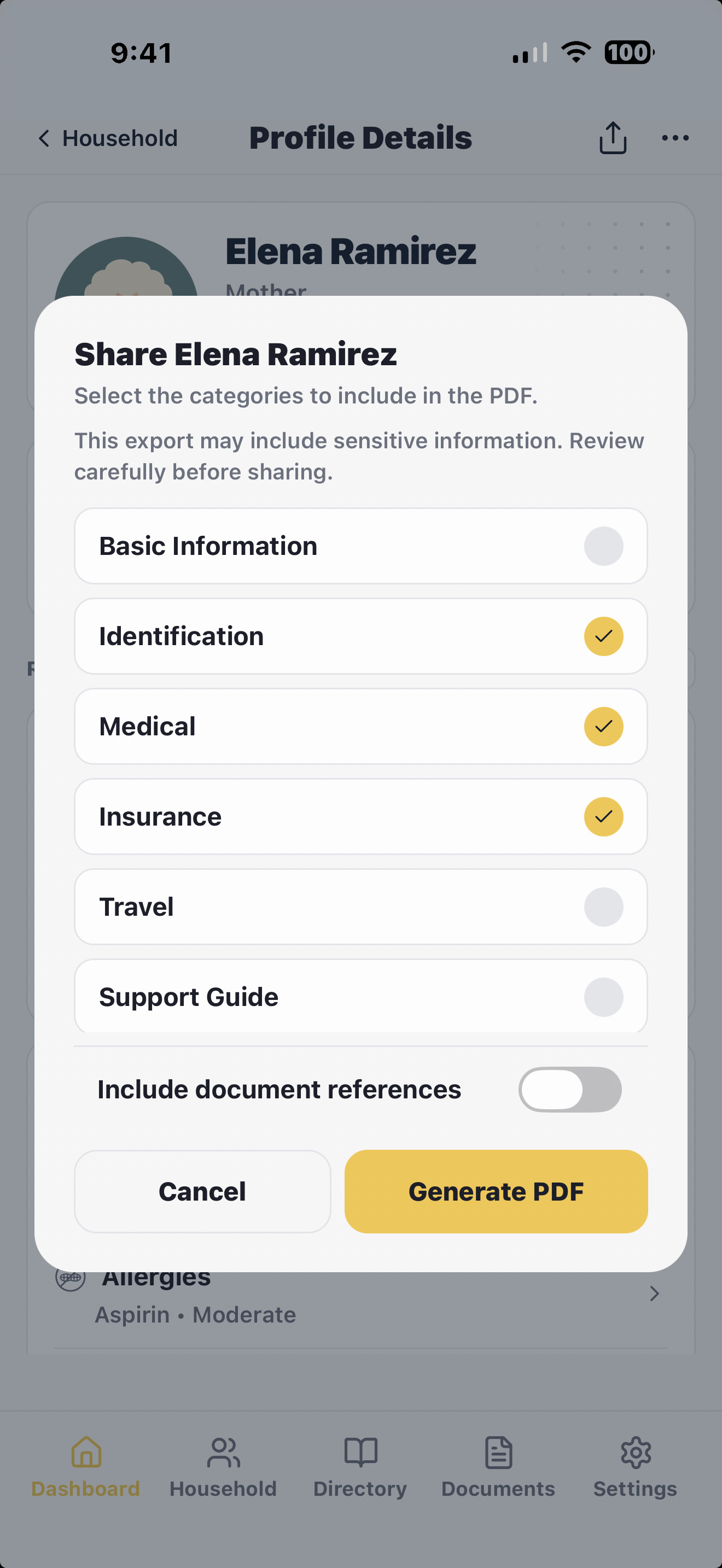
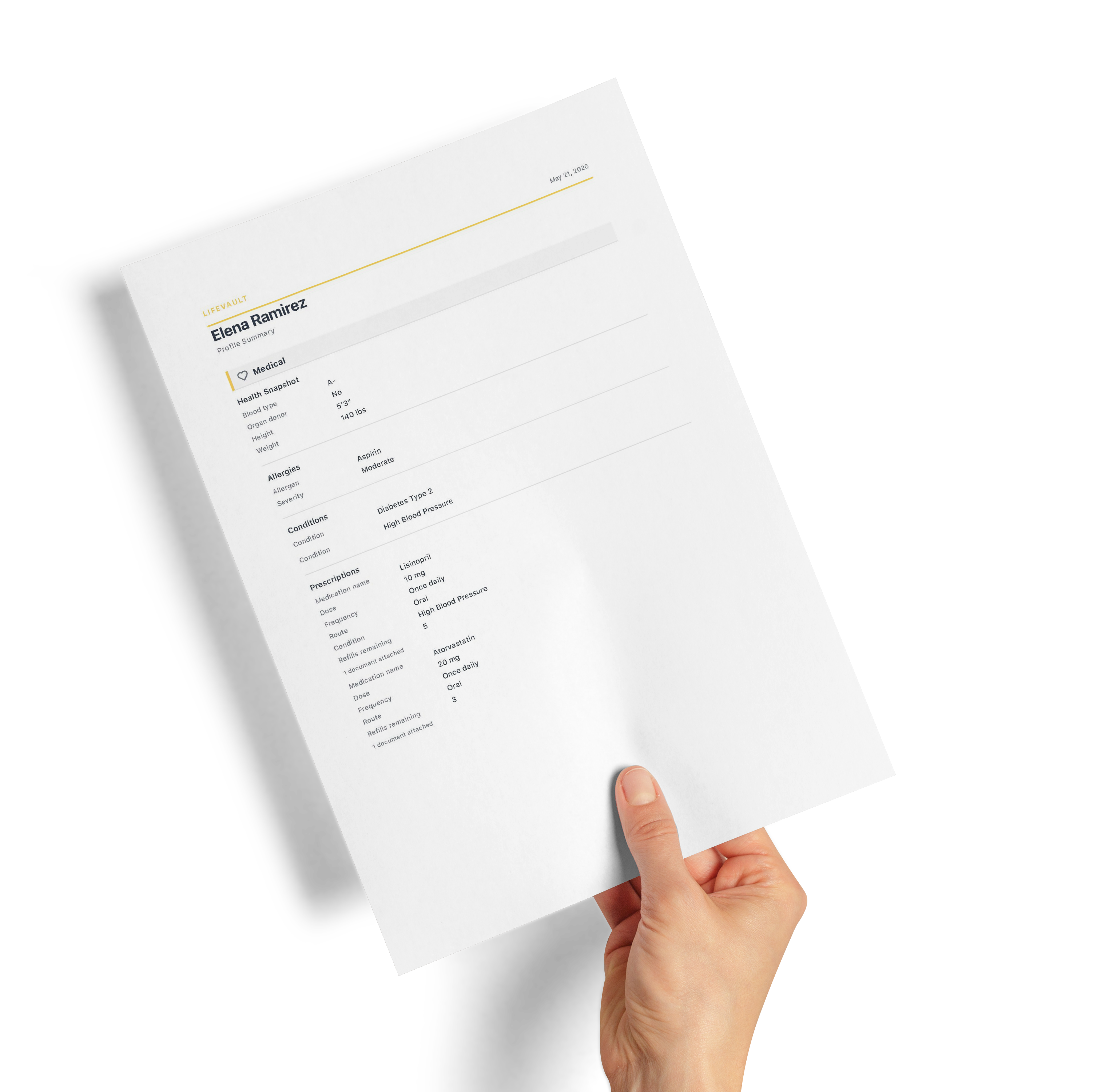
Scan documents, extract and structure the details, then generate a
clean, organized summary to share when someone new steps in.
Helpful for family members, home health aides, babysitters, respite
care, temporary caregivers, and emergencies.
When an aging parent develops dementia, Alzheimer’s, or other cognitive changes, they may no longer be able to reliably manage their own medications, appointments, insurance information, or important documents. LifeVault helps families organize IDs, insurance cards, medical records, advance directives, and emergency contacts before that information becomes harder to gather — so the right details are ready when they’re needed.
LifeVault was shaped by years of caregiving — helping care for aging parents, raising children, and experiencing firsthand how quickly scattered information becomes a problem during difficult moments.
— Rachel, founder
One of the clearest lessons: when a parent develops Alzheimer’s or begins experiencing cognitive decline, having organized copies of their medications, IDs, insurance cards, and medical records already in one place makes caregiving significantly easier. LifeVault was built to help families prepare before those moments arrive.
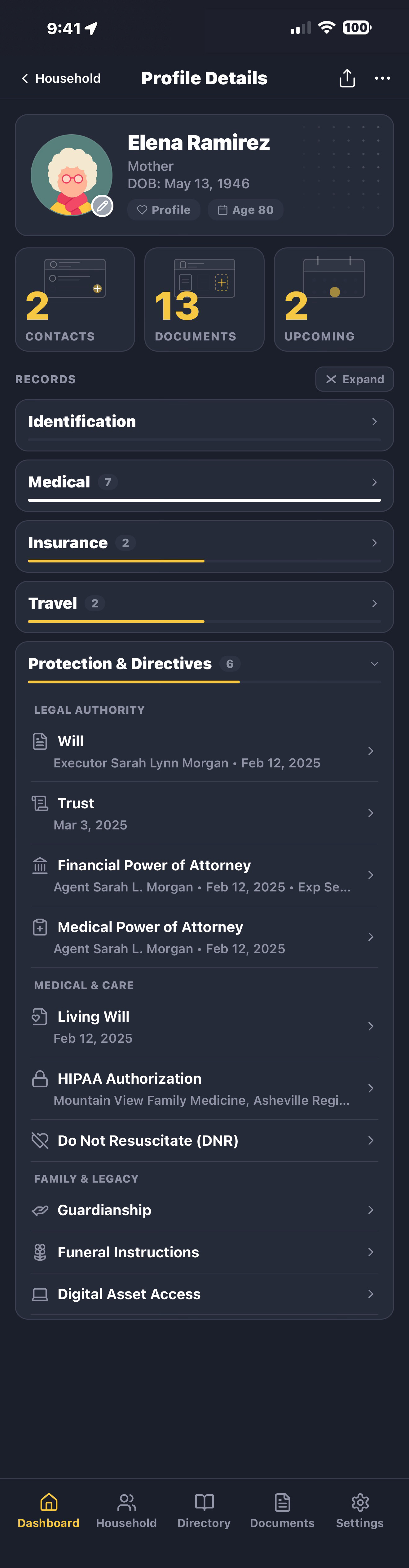
Scan documents — insurance cards, prescription labels, IDs — and LifeVault extracts key details into editable records you review before saving. Build structured profiles for medications, specialists, contacts, and advance directives. Then generate a complete summary to share with doctors, caregivers, or emergency rooms when needed.
At minimum: a current medication list with dosages and prescribers, insurance cards, emergency contacts, specialist contacts, allergies, and any advance directives or legal documents like power of attorney. LifeVault organizes all of this — as part of 90+ record types — in searchable profiles for the people you care for.
Yes. LifeVault helps generate a clean PDF with the information you choose — medications, insurance, contacts, medical history, or a broader profile summary. Review it, then send it through any app on your phone: text, email, AirDrop, and more.
Yes. LifeVault is designed for moments when information matters most — ER visits, hospital admissions, and caregiver handoffs. Keep allergies, medications, insurance, emergency contacts, and advance directives organized and easier to share when needed. Important saved information is available offline, so you can still access it when you don’t have a signal.
Join families already using LifeVault to build structured records and generate complete summaries for the people they care for. Now free on the App Store.